Spanish examThe legends of the Spanish exam
The reading part of the Spanish exam is a Mexican legend. You read it on the screen and answer multiple-choice questions about it, against the clock. Here are the legends to practise on: read each story, learn who is in it, and when you are ready, sit the exam the way it is given at the SRE.
- Read on screen
- Multiple choice
- The answers are in the text
The legendsRead them, then study them
Each legend is a deck on our study site: the full story, questions on what happens in it, and a card for every character and place the questions ask about.
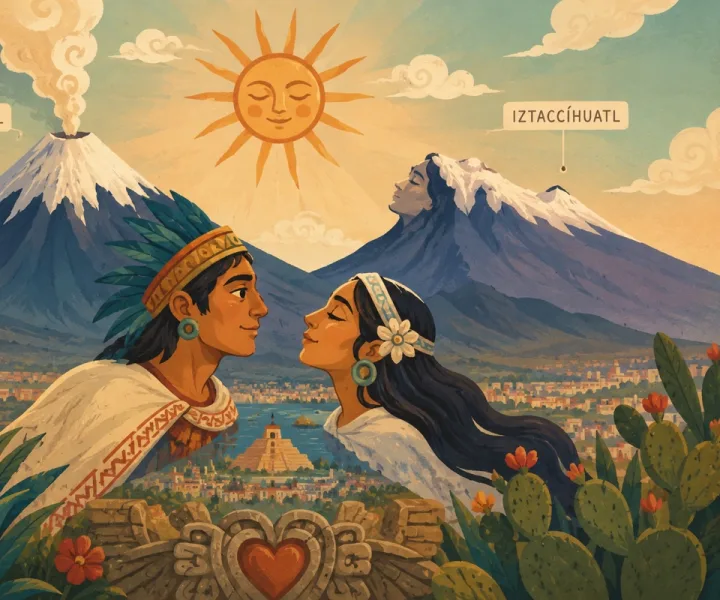 Aztec · Valley of Mexico
To marry the emperor’s daughter, a young warrior must come home from war victorious. A jealous rival tells her he has died, and the gods turn the two lovers into the volcanoes beside Mexico City.
Characters and places- Iztaccíhuatl
- Popocatépetl
- The Aztec emperor
- The rival warrior
- Tenochtitlan
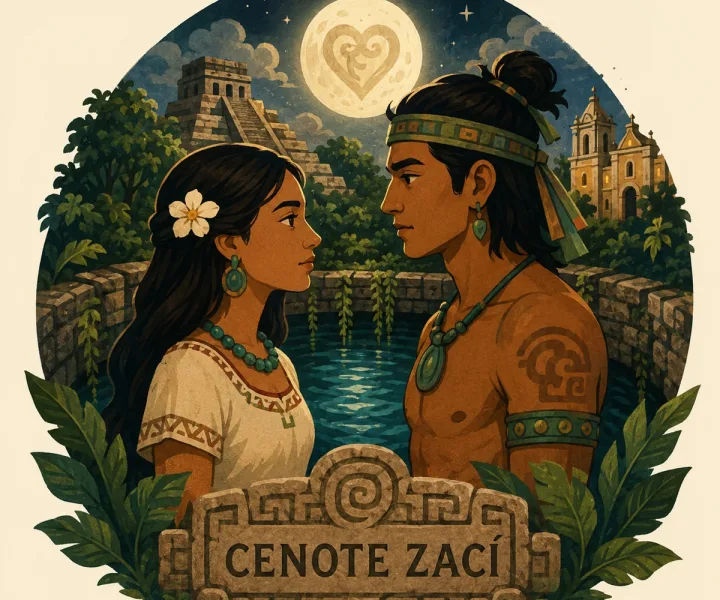 Maya · Valladolid, Yucatán
Sac-Nicté and Hul-Kin fall in love in the Maya city of Zací, but their families are enemies. When his father sends him south to marry a princess, the cenote keeps what happens next.
Characters and places- Sac-Nicté
- Hul-Kin
- The healer
- The cacique Halach-Huinic
- The Cenote Zací
- Zací, the Maya city
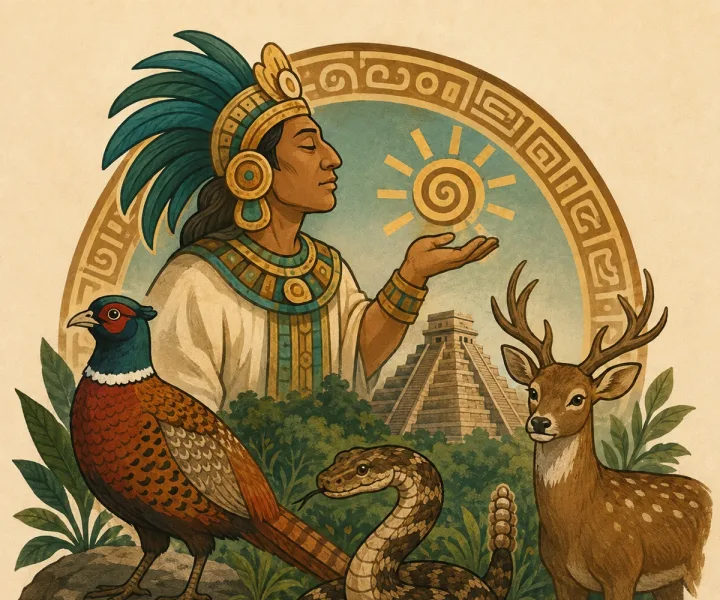 Maya · Yucatán Peninsula
Itzamná creates the Mayab and chooses the pheasant, the deer and the rattlesnake to live there forever. Then the chilames foresee strangers coming from far away.
Characters and places- Itzamná
- The pheasant
- The deer
- The rattlesnake
- The chilames
- The Mayab
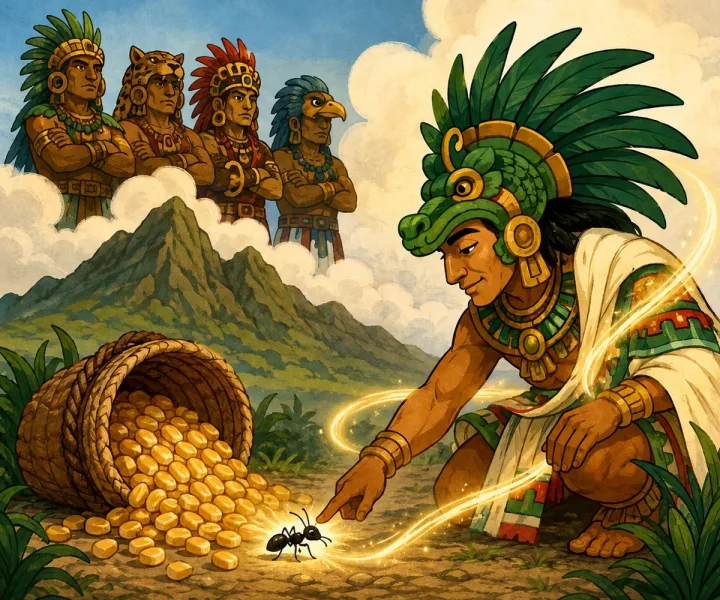 Aztec
AztecCorn lies hidden behind the mountains, and not even the gods can move them. Quetzalcóatl tries cleverness instead of strength, and turns himself into an ant.
Characters and places- Quetzalcóatl
- The ants
- The corn
- The Aztecs
- The ancient gods
- The mountains
How to prepare
Three steps per legend
- 1
Read it slowly, then read it again
On exam day the answer to every question is in the text in front of you. What wins is reading carefully, so practise exactly that: once for the story, a second time for the details.
- 2
Learn who is who
The questions turn on names — who lied, who was sent away, who turned into what. Study the characters and places with flash cards and spaced repetition until the names stop blurring together.
- 3
Sit the practice exam
The simulator gives you a legend to read and questions on a running clock, then a short interview in Spanish, graded at the end.
These are our own retellings of the legends, following the story each one tells. The text on exam day is worded differently, and it may be a legend that is not here — which is why reading carefully matters more than memorising any one version. Applicants from Latin America and Spain are exempt from the Spanish comprehension part. What the exam contains
Keep studyingSit the Spanish exam before exam day
A legend to read and questions to answer on a running clock, then a short interview with the examiner — all in Spanish, as at your appointment, with a graded result at the end. The simulator is free; it asks you to create an account so it can keep your results.
Start the practice exam